Airline Economics &Aviation Leaders 2027 series
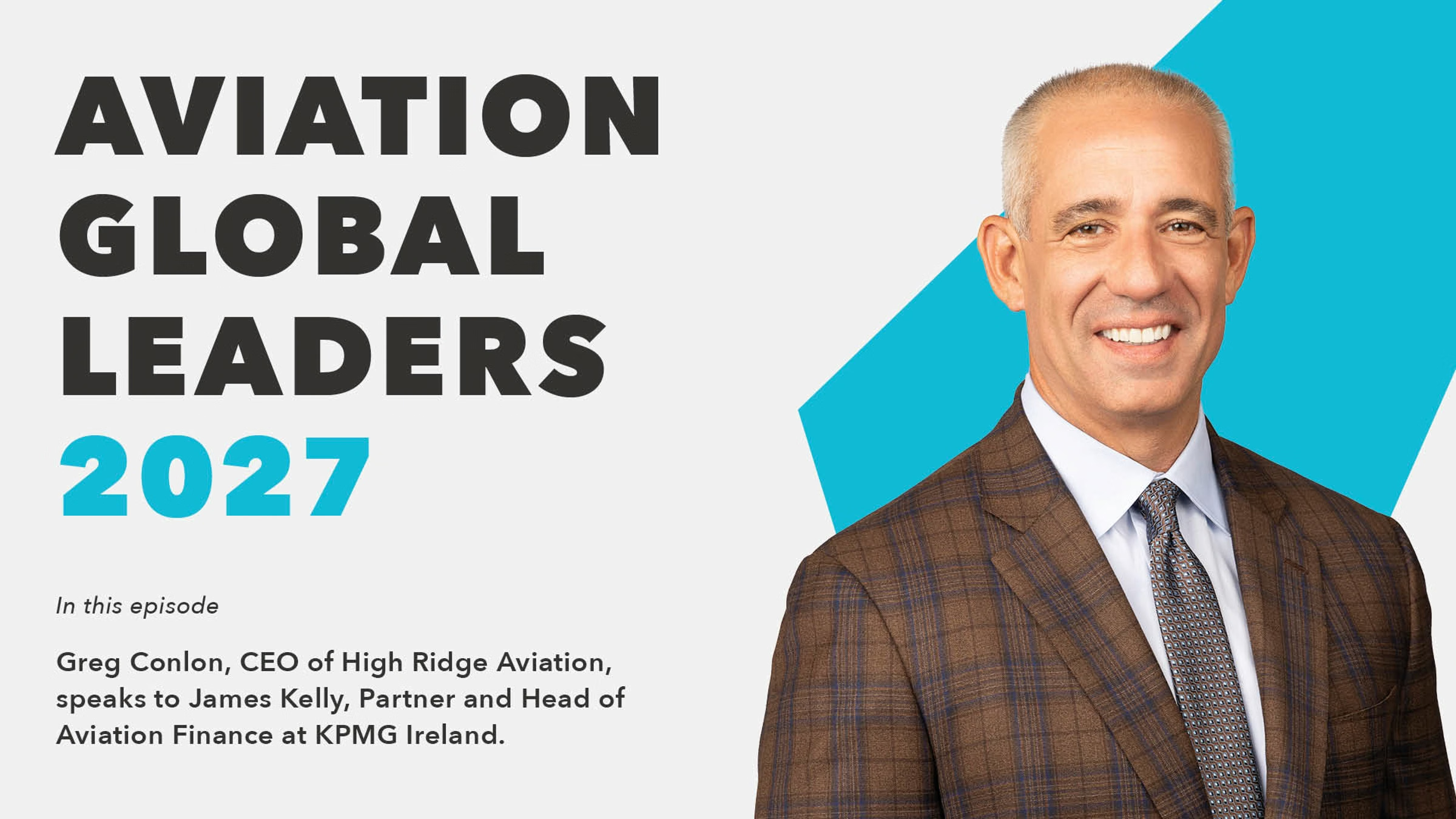
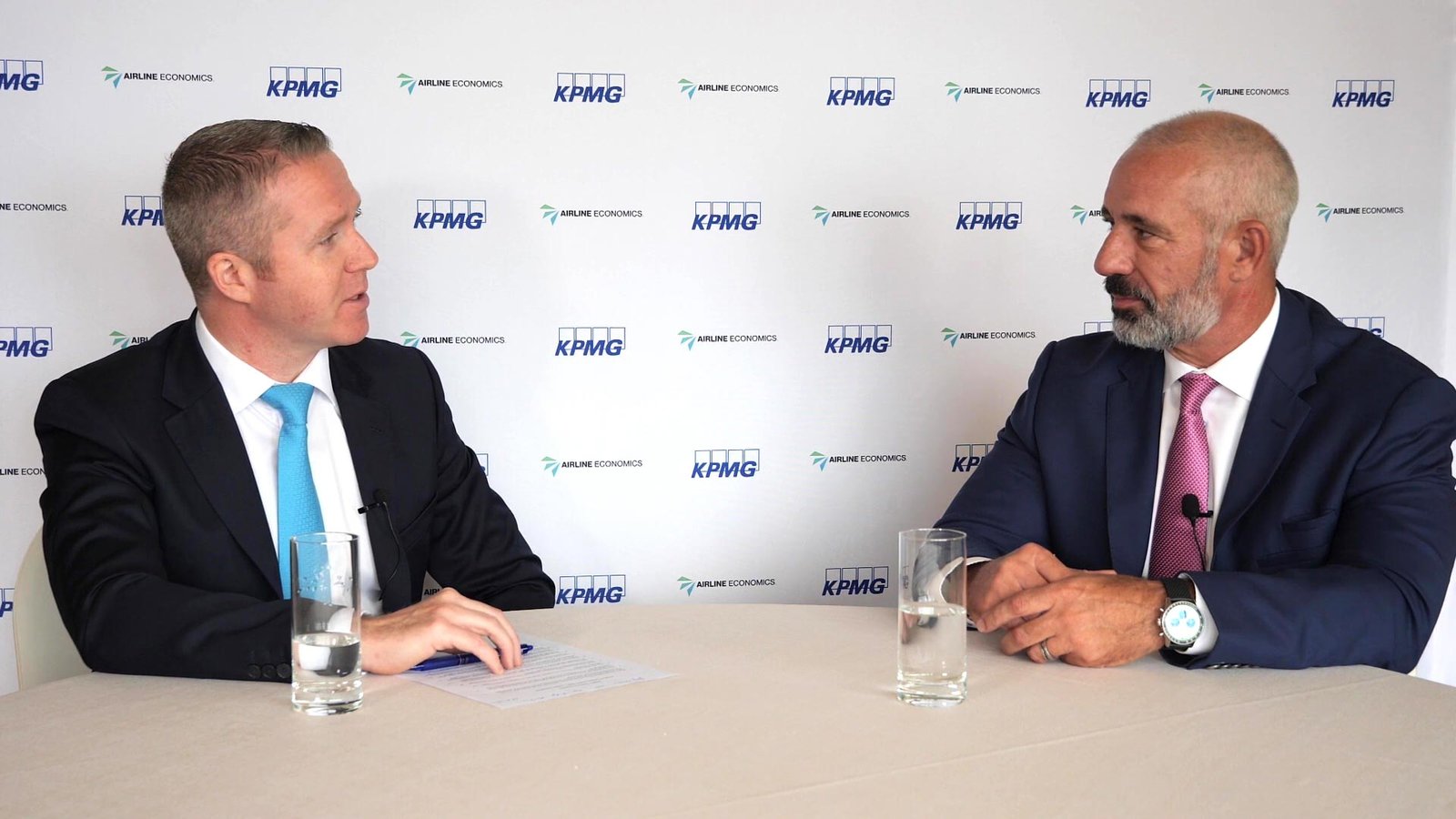
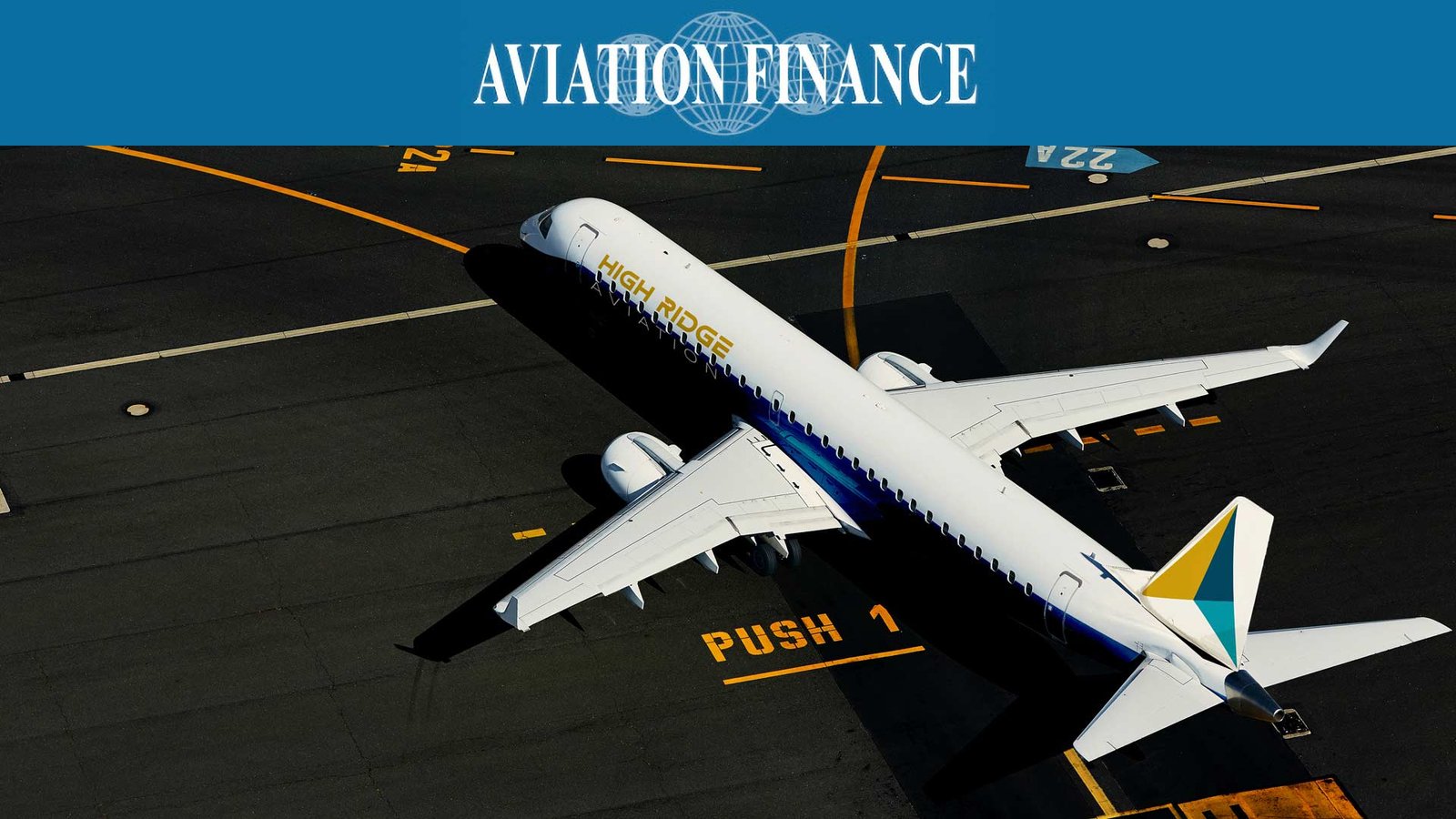
Greg Conlon, CEO of High Ridge Aviation, joins James Kelly, Partner and Head of Aviation Finance at KPMG Ireland, to discuss the outlook for global aviation finance and aircraft leasing heading into 2027. Conlon examines the resilience of airline demand, impact of macroeconomic pressures on airlines, and the persistent aircraft supply-demand imbalance, which he anticipates will continue well into the next decade.
He explores the implications of engine reliability, rising maintenance costs and fuel prices for aircraft investment decisions, alongside the outlook for aircraft values and lease rates.
The conversation also considers the evolution of aviation financing markets, the role of asset-backed securitisation, the emergence of new sources of equity capital and the importance of investment discipline in an increasingly competitive market.Now in its ninth edition, the Airline Economics Aviation Leaders series is exclusively supported by KPMG. The series brings together senior industry decision-makers to review the state of the global aviation industry and assess the opportunities and challenges ahead.
Watch the video below.
Video originally published by Airline Economics here: https://vimeo.com/1241233375.
Transcript
James Kelly, Partner and Head of Aviation Finance at KPMG Ireland
My name is James Kelly. I’m the Head of Aviation Finance at KPMG. I’m delighted to be joined by Greg Conlon. Greg is the CEO of High Ridge Aviation, and he’s joining us here in New York in October 2026 for the purposes of our Airline Economics KPMG leadership series. So Greg, first of all, thank you for joining us.
Greg Conlon, CEO of High Ridge Aviation
Thanks for having me.
Kelly
Great to see you again.
Conlon
Great to be in New York.
Kelly
It would be great if we just start here in October 2026. Lots of challenges in the geopolitical environment, oil prices, inflation. What’s your perspective on where the market’s at? And I suppose, as CEO of High Ridge, what are you focused on? What are the indicators you’re looking at for the next couple of months?
Conlon
Yeah, James, there’s a lot that’s moving in our space, particularly since the last time we spoke a year or so ago. I think there’s a couple of main themes happening through here. First is interest rates. We continue to see interest rates rise a little bit, not to be unexpected from the floors we were coming off post-COVID of 1% or sub-1%. So having the 10-year U.S. Treasury at about 5% for the first time in well over a decade and a half, we’re certainly seeing some elevated interest-rate levels. And the interest-rate level is really a solving function to try to cool an inflation rate. And I think globally, inflation has been higher than most countries and governments—certainly the European Central Bank, the Fed—have targeted.
And so they’re kind of chasing that inflationary environment. And then that theme is driving a little bit of discretionary spending habits on behalf of folks. And depending on what aircraft model you’re flying, you may be more or less impacted by that. And we can talk about that a little bit too. And then, of course, the elephant in the room here is fuel. In February, Brent crude was trading somewhere around $52 a barrel, and the crack spread was $15, $16. So call it 70-ish a barrel for jet fuel. And then we saw that by March or early April spike to well over $230 a barrel. I think it’s moderated a little bit. But when you have fuel, which is the airline’s either number-one or number-two expense behind labor, at anywhere between 20% to 30-plus percent of your cost structure, when that doubles overnight and sustains, we’ll see some pressure come through that from a macroeconomic perspective.
And then none of that has particularly helped some of the supply-chain issues we continue to see in terms of engine shop visits, deliveries from Boeing and Airbus, MRO capabilities. So, same theme, different day on that theme, but certainly not helped by some of those other macro events we’re seeing.
Kelly
And do you think, as you chat to your airline customers, which I’m sure you’re doing all the time, what’s their perspective as they look out into 2027? So like we’ve had a couple of years of pretty solid global airline profits. 2026 looks like it will be back because of some of the challenges you described. What are you hearing on 2027? And particularly, are there regions of the world or airline business models that you’re most focused on and concerned about at the moment?
Conlon
Yeah, the last part of your question is an interesting one, but I’ll try to do it in order. I think the overall sentiment of the space from airlines is still positive. Now, if we go back to a couple of years ago, or certainly pre-COVID, revenue levels today, all things being equal, are at or above almost all pre-COVID levels. And 2019, give or take a few, was the most profitable year in aviation, and that’s well been exceeded in the past several years, particularly in the U.S. You’re seeing some of the majors print some of their earnings, and it’s notable that revenue is still up over last year. They’re having some cost pressure, as we talked about, so their income margins are coming down a little bit, but their revenues are still good.
So there’s still a lot of optimism in this space about a strong demand environment. But we do see some weakness in that demand environment, particularly on, I’d say, more of the low-cost-carrier model, some of the more discretionary-spending model. I’m going to think of a city that doesn’t probably exist in terms of city pairs, so keep the comments off the line. But folks flying Stansted down to Athens for a weekend for 59 pounds—if it’s 199 now, they won’t go. And so you’ve seen some sort of dislocation in that. And then the last part of your question, I think, is the interesting one. It speaks a little bit less about the LCC model, but more about the evolution of the larger airline model.
Long gone are the days when you board an airplane and you had two options: you turn left and you got a good seat, and you turn right and you got a lousy seat. And that’s just sort of how life was. Now consumers have a ton of choice. You can fly as far left on the airplane as you want to pay for it. And the big airlines are actually quite good at matching that LCC fare. And they don’t have to match for 100 seats. They’ve got to match for 12, if that—maybe six. And their model is able to pick up some of that traffic because of a couple reasons. They can match the fare. They can offer modest increases in price that customers are willing to pay for: seat assignment, extra legroom, bulkhead, whatever you make up, even a slight bump in class.
Frequent-flyer programs that are far more valuable than maybe some of the smaller ones. Frequency of flights. And so if you’re flying on business, you can have that flexibility if you need to move back and forth. And so the larger airlines have become quite successful at attacking some of that LCC model. And then at the same time, the LCCs aren’t immune to cost creep as well. And so we’ve seen, in some—not all—but some just haven’t been able to get that cost level to where it was pre-COVID. And they’re the most sensitive to that revenue environment or that ticket-price environment. And you’re starting to see that in some of those earnings coming out of that. So from the airline perspective, they’re still bullish on demand.
And they’re focused on cost management, fuel management, and a broader product offering seems to be a safer moat in terms of the airline offerings.
Kelly
And just to focus in on that premium product, particularly here in North America, is there any sense that maybe if consumers come under pressure, they might start moving back in the airplane?
Conlon
Yeah, you know, it could be, James. I remember hearing the argument very strongly while we were all locked up during COVID: this is the end of business travel. The world turned—albeit clumsily—but it turned without air travel. Everything’s going to be on Zoom. All business calls, all sales calls are going to do this. Companies are going to cut costs. And guess what? Business traffic exploded as soon as it came out. And there was a return to business traffic, but there was also a lot of that consumer, that K-type consumer, that could afford to pay a little bit more for that Economy Plus and move up to maybe the extra legroom—or whatever company name I’m robbing for this product name, so apologies to the airlines—but we saw that space fill and grow with that.
Now, anything’s possible. If we continue to see inflationary pressure, fuel pressure, global bond prices continue to rise as governments find it harder to finance fiscal deficits and whatnot, you might be able to see that, where people are turning back. And it’s not just the airline space; it’s that K-shaped economy in total. Haven’t seen it so far. It’s been pretty resilient. But it’s certainly possible. How long will it take on a continued trajectory like this? We’ll see. But so far, it hasn’t happened.
Kelly
Okay. One final question on the airlines. We’re facing into, let’s call it, northern winter, right? Traditionally, a period of lower demand. And there’s always bankruptcies in this sector, right? It’s just par for the course. But do you think we could have a slightly higher uptick—or an uptick—in bankruptcies over the winter?
Conlon
Yeah, you’ve seen it. It’s regionally focused, right? So where we’re seeing more pressure on credit—and there is more pressure on credit coming through as interest rates rise—there’s debt refinancing that has to come through. And so facilities that were raised post-COVID at very low rates are now having to come due, and that’s just going to plow higher costs through the financial model. But particularly, you know, Southeast Asia, we’re seeing some continued pressure on credit. And that’s really a function of COVID: not a lot of state aid, no formal restructuring process à la Chapter 11 or U.K. plan of reorganization, so they weren’t able to kind of really cleanse the balance sheets. So that pressure is still there.
Seeing some pressure in Europe and some of the carrier models, for some of the similar reasons. So we’re cautiously optimistic about credit, but you are seeing some credit pressure come through. And it’s really coming down to where the less broad model is coming under more of that credit pressure. And then on the asset side, one of the benefits—one of the reasons why some of the weaker credits can get relatively efficient financing—is for a couple reasons in our space. They’re not borrowing unsecured. This is asset-backed financing, be it finance leases or op leases. And the asset is quite fungible. It’s very liquid. You can move it. It doesn’t take a lot of time to turn it around.
It doesn’t take a lot of money to reconfigure it. The cost of the engines is well known. All those things help keep cost of capital lower than it probably would be for some of these credits. But we’re seeing some of that pressure come under where it’s taking longer to move airplanes. You have more expense on shopping engines. More of the engines need to be shopped than typically have been the case. And so as the transition cost grows for what were commodity asset types, you’re going to start to see some of that pressure come through, and that credit premium might start to creep up a little bit.
Kelly
Yeah, be priced in. If I pivot from there to the OEMs, right, so if you look at the data to date, there’s been an uptick—to use that word—in deliveries for the OEMs. What’s your perspective on how that looks from here to 2030? And maybe to broaden it out, what do you think that means for aviation finance? What does it mean, for example, for older aircraft, midlife aircraft? And how do you think about that uptick in OEM deliveries?
Conlon
Yeah, so a lot in that. Eventually, the overarching question there is: hey, when do we get back to parity in terms of balance of supply and demand? And the OEMs are sold out, give or take a few, for the next nine or 10 years. There’s a couple slots maybe in the late-mid-30s, but you’re probably not going to hit parity until well into the next decade in terms of supply, barring some existential shock, right? So you’re going to have this period of time where the world’s just undersupplied. And the reasons for that are well known: two aircraft manufacturers, three engine manufacturers, and there’s no new entrant between now and then. It’s just not going to get that much better that much sooner.
Some news this week: Boeing got the MAX 10 certified. Their production rate is moving in the right direction. I think they’re making some good moves there. Airbus’s production is about as high as it’s been recently. So they’re catching up as fast as they can, but it is going to be a while on the supply side. And in terms of, you know, as that improves, you have these markets of midlife and end-of-life aircraft that are aging. And the midlife space was a super-interesting space for the past four or five years because you had a midlife space with a well-defined engine program, well-defined maintenance costs that were pretty standard. You can kind of count on it. And then you had the midlife model really benefited from, I’d say, call it anywhere from four to six years of extra lease stream that you may not have had because the new aircraft weren’t coming.
So the midlife model was super interesting, and we saw a lot of growth there. And then the rising tide lifts all boats in terms of an undersupplied market. When it’s an asset-friendly market, you see asset values go up. We saw that with lease rates, residuals, and end-of-life aircraft benefited from that too. But midlife, all other things being equal, gets smaller every day because all of that’s out of production. And we saw a lot of capital come into the midlife space. And I would predict, as production ramps up, all other things being equal, you’re going to start to see—I don’t want to call it a correction; I want to say more of a normalization—of that midlife profile.
So those extra five or six years of lease term that you probably didn’t bank on when you went in, probably not going to have as much. And so you’ll see some contraction on that. And then, hey, whether we love the new technology or we don’t love the new technology, you can’t buy the old technology anymore. It’s gone. They’re not gone, but they’re not making it anymore. And so you have to pivot eventually to new technology. You’re going to reach crossover where there’s more new tech flying than old tech, depending on the next ’28, ’29, give or take a few, and that will become the dominant investable space.
Kelly
Okay. And if you think of it then, you touched on earlier the higher maintenance costs and the issues over the last number of years around engine reliability. How do you think about that when investing in assets? And does it influence the asset type, the engines attached to those assets, the vintage or what you want to buy? How do you think about that?
Conlon
Yeah. A hundred percent it influences it, because the bigger disparity you get between what an airline pays to repair an engine and what a lessor-owner pays to overhaul an engine, the more credit premium you’re going to see in a lease. And if, as I talked about earlier, the engine costs are homogeneous in terms of kind of agnostic of ownership—there’s always going to be some differences between lessors and airlines for a lot of reasons, a lot of good reasons—but the broader that gap gets, you’re going to see risk premium being charged for weaker credits and weaker credits with some of those engines that are at risk. And we’re starting to see that now with some failures and some aircraft lessors that have to remarket aircraft, and then they’re faced with some pretty large bills to overhaul engines.
And so I’d say the smart money and the diligent money will be thoughtful about how you invest in those things. And eventually the weaker credits, either be it startups or for whatever reason, they’re the ones that need the most access to capital. And to the extent you start to squeeze that space and dry up capital for that, I think it’s going to be probably more problematic for that segment of the market. But we haven’t seen situations like this before where, if there’s an airline bankruptcy or otherwise, you have a massive dislocation in terms of engine costs versus what it would have been if the airline survived. So it’s definitely a new underwriting thesis we’re in.
And in a tight aviation market where there’s not a lot of aircraft to invest in, shrinking your investment thesis because you don’t necessarily want to invest in this asset or that asset with that credit just sort of tightens up that investable universe even more. So I think the theme in this space—and the caution to asset managers—is the good asset managers are going to be very thoughtful and patient about how you deploy capital. Because it’s easy to say, hey, there’s no aircraft out there, rents are up 20%, great time to own, leases get extended. But there are different risks in this market. The oldest saying in our space is you make your return when you buy your asset.
And the good asset managers will deploy capital efficiently, but they’ll deploy capital cautiously in a market like that.
Kelly
Can I ask you one philosophical question before we get off maintenance? On the new-tech aircraft, which are 10 years in now, so they’re kind of more like current tech, arguably: the trade-off between the lower fuel costs for the airlines versus the higher maintenance—what would you say on that spectrum? Hasn’t been worked out probably when I get that, right?
Conlon
Yeah, well, to be fair to the engine manufacturers, I don’t think either engine manufacturer—this wasn’t their dream outcome. Both of them would have loved to build the next toy and have the same or better utilization than the previous one, and the industry would be singing from the rooftops if that happened. The reality is, it gets harder and harder to get that 15% to 20% fuel-burn benefit, which is what you need to launch a new engine type every time, because the low-hanging fruit’s been picked. And so what the engine manufacturers are having to do to try to achieve that is more technically intense. So I’m sympathetic for the challenge they face, but it’s almost a perfect storm where, prior to February this year, when you had relatively inexpensive jet fuel, the older technology was looking very compelling.
The airlines—I mean, at $70, James, at $70 a barrel for jet fuel—an airline would fly anything with wings in the revenue environment we’ve got, and you can make money at it. When it’s $150 a barrel, then the new tech starts to matter, and so that fuel-burn benefit definitely helps. But if your overall costs are double, it’s hard to square that fuel equation. So I still think we’ll get to a place where the engine maintenance starts to make more sense. Where I think you’ve got to be careful as an investor is what period are you investing in those engines? Because if the fix to get more reliability excludes your engine population because, hey, this is a fix that will only be done on original manufacturing—you can’t pip it, or you can’t retrofit it—you’ve got to be selective about, hey, I’ve got to be careful about investing in this because I might have a finite element of engines by manufacturer A or B, or whomever it is, that I can’t pip these engines, and it’s always going to be this.
So it’s definitely something you watch. I think higher fuel helps the newer-technology aircraft, but the maintenance cost of these engines certainly hasn’t been where anyone in the industry would want it, and I think the engine manufacturers would be the first to tell you that.
Kelly
Okay, you’ve touched on the jump in these lease-rate factors since COVID, over the last number of years. Maybe to start with the purchase-and-leaseback markets, which you guys have been active in: what’s your sense on how that’s priced at the moment and how competitive it is?
Conlon
Yeah, there’s the argument that lease-rate factors are up circa 20% since pre-COVID, give or take a few, and I think that’s sort of plateaued. And in some cases you’ll see a little bit more. But most of the pressure on lease-rate factors is coming from—believe it or not—there’s a lot of capital that’s coming into the space, there’s a lot of folks chasing deals, and you’re just seeing, hey, there’s nothing else to buy, so we’re going to buy it. We know it’s a little skinny. I’ve had other lessor CEOs tell me, ‘I don’t know how folks are getting returns on this stuff.’ And, you know, paying for growth, James, is not a new story in our space.
New platforms come in all the time, want to scale up quickly. It’s much easier to buy a 50-aircraft portfolio than organically grow two or three at a time. So, well understandable. But as long as you’re doing it eyes wide open—you’re overpaying for a period of assets, you know your return’s going to be compressed, but you’re doing it because X, Y and Z. But we’re also seeing folks just—they’ve got capital to deploy. And so we’re seeing that lease-rate factor actually be kind of a ceiling on it just because of demand for assets on the list, which is counterintuitive. You would think if there’s not enough aircraft out there, those who do have them can charge, but those looking to buy them that don’t have them are kind of putting the ceiling on.
So it’s kind of why you’re seeing it cap out here for a bit. And again, it goes back to my earlier comment: you make your money in our space, as an asset investor, as a lessor, on the buy side. And you can have some accretion in your portfolio for a credit uplift, but generally speaking, you’ve just got to be very cautious about overpaying for assets. And we’re seeing more and more of that. There’s still opportunities out there on the sale-leaseback market—usually heavily bid. There are some opportunities out there, but it’s a little frothy right now.
Kelly
Okay, and you guys dipped your toe into the freighter market last year, right? So can you just help me show the investment thesis around that?
Conlon
Yeah, the freighter market—we obviously have a lot of experience in that market given our background. And what we’re seeing is there is a very interesting freighter dynamic going on, particularly on the widebody freighters, because we talked about supply earlier on. And I think the biggest dislocation in supply has been on the widebody side. All the focus has been, hey, how many MAXs is Boeing producing this month? What is the NEO production rate? Nobody really talks about what’s the 787 or A350 production rates, and neither one of those rates are anywhere near pre-COVID levels. And the new factory freighters that both of them are building really aren’t being built yet. So there might be a couple of 777 freighters left to be built, but I don’t think they’re taking—could be wrong—but that program is more or less done.
Airbus is building the new A350, but it’s going to be years. And because there’s no widebodies being delivered, the freighter stock of widebodies that were in service that would be converted, they’re being flown longer, so there’s no real freighter stock. So there’s a big dislocation in some of the widebody freighter—not all of them, some of the widebody. And opportunistically, we like that space for the right product. So we’ve done a few of those. On the narrowbody side, I still think it’s a little heavy in terms of supply. A lot of NGs were converted in the last time around, and it seems a little high. But on the widebody side, it’s an interesting spot.
Kelly
Prediction business right now is a dangerous one, so let’s just do it for a minute. 2027: what’s your sense on lease-rate factors and aircraft values, maybe just breaking that down across the types that you typically invest in?
Conlon
Yeah, let’s assume inflation stays where it’s at because, as you know, one of the advantages of aircraft in general is it acts as an inflation hedge for people to invest in it. So if we’re assuming, call it anywhere from that target 2.5% to 3% inflation, I think aircraft values can continue to be buoyant. They’re probably normalizing in terms of, you know, I don’t expect them to grow another 20% over the next five years. If we are, we have other things to worry about. But I think it’s pretty flat. I think your lease-rate factors are pretty flat going forward. Maybe you’ll see some attractiveness on the widebody side that you haven’t before. I know a lot of those engines are being aggressively bid because you have the combination of relatively newer-tech widebody with known older-tech engines, and so that’s kind of an interesting space to be in.
But I don’t see material degradation in either values or lease rates. But I think the days—it feels to me like the days of this above-market or above-normal trend growth in aircraft values—is probably more likely the norm.
Kelly
Okay, let’s pivot to the liability side of the balance sheet for a moment. When we were here last year, I think the general sense was the debt markets—across bank, capital markets, alternative lenders, government, whatever—were wide open. Lots of availability. What’s your sense now, and what impact might the interest-rate uptick have on that?
Conlon
Yeah, the debt markets last year came back in and were quite constructive. And we issued an ABS earlier in March at one of the lowest levels since COVID, and a big subscription book in that book. Those markets were super aggressive. We probably saw six to eight prints from aircraft ABS. But overall, the asset-backed financing market in total came back. Seeing a lot more activity from the alt lenders. LR AirFinance with us has been quite active in the markets, both with airlines and lessors, both rated debt and unrated debt. So there is more of an alt presence in there as well. Some of the commercial banks we’ve seen coming back in. I think, over the last couple of months, you’ve probably seen the ABS market—they’re open.
They’re probably not going to be at the record levels that you saw before, but financing seems to be pretty robust and pretty available at the moment for this space. We’ll see how the credit prints continue to go during the time, but I’d say they’re maybe not as constructive as they were six months ago. But if you need finance, you can get it.
Kelly
Yeah. And do you think—maybe start with the bank side—do you think the pool of lenders is now stabilized, or indeed has it grown, or could it contract a little bit? What’s your sense on that?
Conlon
Yeah, we’re seeing growth with lenders, particularly the big banks that you think about that do warehouse facilities and then do asset-backed facilities. And we’re constantly doing structured finance. We’re also seeing more activity from banks that want to do term loans with certain credits. So you have the option as a diverse lessor—you don’t have to finance your entire portfolio with an ABS or a giant term loan or a warehouse, if you will. But for select credits and jurisdictions, there’s a pretty strong term-loan market open there. We’ve done a few of those in our portfolio where we were able to get better financing than both an ABS, a warehouse, or a sort of macro-term portfolio term loan, if you will, because banks really like that credit.
So selectively you can still get some pretty good financing. We’ll see where interest rates go overall. But, you know, I think this goes back to a good lesson in liability management, as you said, in duration-gap measurement and where you can diffuse risk on that return profile, particularly that left-side downside risk. A lot of that financing comes into that play, right? So, hey, this is the basics, James: make sure you’re match-funding your liability stack. Don’t fund your leases with a warehouse hoping rates are going to come down in two years. Those basic things. One of the benefits of our space is leases are fixed rate, so fund it fixed rate. Lock in your spread and keep your portfolio clean.
So basic liability management, risk management. Make sure you continue to be diverse in your portfolio—jurisdiction, credit and asset-wise. That’ll certainly help. There’s going to be some credit shock, as there always is in our space, but I think the better portfolio managers are going to make sure that the portfolio is constructed soundly, you’re not overweight in any particular sector, and you can kind of really minimize that downside risk.
Kelly
On the ABS, you guys got away earlier this year. Can you tell me how that came together? So what do you need to get an ABS away as a first-time issuer? And then will you be active in that market in 2027?
Conlon
Yeah, so an ABS is a very efficient form of financing, but it is expensive to do. The fee process is not insignificant. If you’ve issued ABSs before, if you’re a servicer before, that definitely is an issue because you’re competing with the bond buyers for other assets, and so you need to have a story behind that. And certainly, given our background at GECAS, and now with High Ridge and with PIMCO, that’s certainly, I think, a good story for investors to come in, and they understand that we’ve been in this space for a long time. You generally need good banks that are able to drive competitive tension in the book, but drive a good process and bring people in.
But most importantly, your portfolio matters, right? What are the investors buying? So the print we went out with in March had a very good portfolio. Again, we’re not ABS-ing the best 16 airplanes we have out of a 60-airplane fund. It’s a representative slice of our portfolio. It was a very clean portfolio: young aircraft, lots of lease term remaining, diverse. And combined with the pedigree of the management that we bring to the table, as well as PIMCO’s financing structuring, you’re able to get really good execution. And the ABS markets need to be an opportunistic strategy, but not an underwriting strategy, because the capital markets move. They’re open when they’re open, and you need to be able and ready to move quickly when you see an opportunity there.
But if you’re underwriting assets assuming you’re going to get an ABS takeout at X, you’re not diffusing that downside risk; you’re taking more risk on the other side. So ABS is a refinancing opportunity. It’s not an underwriting scenario. And we don’t underwrite to an ABS. We underwrite to a, well more conservative term, permanent financing. If the markets are there and constructive, we take it. And if you want to give yourself time, if they’re not there, you don’t have to. The last thing you want is a 12-month warehouse with a ticking gun to your head that forces you to take financing out, because I guarantee you, whatever date you picked to refinance under — let’s just say — it’s going to be the wrong time to do it.
So you need to be able to move quickly. You need to be partners with good banks. You need to be experienced in the space and have a good portfolio.
Kelly
Can I ask you, maybe on the equity side, you’ve kind of experienced it all, right? So you’ve been owned by an industrial—effectively GE. You’re owned by PIMCO now. The investors, the equity investors in this space: have they got deeper? Is there more interest? And I suppose, as part of that, frankly, have return expectations moderated because maybe it’s become more mature?
Conlon
Yeah, I’ve seen—and we’ve all talked about—there’s been a lot more capital coming into the space from different sources. And it used to be aircraft lessors were primarily mega-balance-sheet lessors, either owned by an industrial parent that generated a lot of cash flow and could invest in a finance company, or insurance companies were a good example of that, that generated a lot of cash and needed to invest it. And then what we’re seeing now is pockets of capital coming into the space from all different sources of investors: from pensions, from sovereign wealth funds, from private family offices, from all sorts of wealth channels are coming into the space. And where you’re getting that attention to this space is aircraft leasing behaves a little bit like infrastructure finance, but it trades about 250 bips wider than infrastructure, but it’s cash-flowing day one.
And so a lot of investors that were in private equity pre-COVID, when rates were really low and private equity was promising rates at 8%, 10%, 12%—well, versus 1% Treasuries, you’re like, hey, that’s great, so there’s a lot of money in there. But what we did see coming out of COVID is how that cash flow manages. You need to exit these assets in order to pay your investors back. So a lot of the business in private equity that weren’t able to exit during COVID now pay a lot of attention to: show me cash flow. And the advantage leases have to this capital is an aircraft lease is cash-flowing day one. You close a fund; as soon as you buy an aircraft, you’re distributing capital to investors, versus an infrastructure where you’ve got four years to build a bridge, or a data center, where you’re building out a data center and it’s going to be three or four years before you see return on that.
So they like a lot of that. It’s what they call HALO assets, right? These are hard assets, low obsolescence. The aircraft aren’t going to be replaced during the fund’s lifetime by anything else. So they like that space. And depending on where you are, there’s depreciation benefits as well. But mostly, the capital that comes into this is huge, multi-billion-dollar funds that can put $100 million into an aircraft fund and it represents less than a tenth of a percentage of their total assets. And so it’s a much more diverse way for them to access capital. It’s an inflation hedge for a lot of investors, and they target that return profile to fit into funds they want. And so if you want a higher return profile, you’re going to more of the midlife and maybe end-of-life aircraft: slightly shorter tenor, more risk associated with that, but that’s okay.
So as part of a balanced portfolio, aircraft leasing is quite attractive to these capital sources. It’s just how do they enter it?
Kelly
Do you think that 250 to 300 spread on infrastructure—do you think that can be narrowed, or is it always going to be there?
Conlon
Yeah, you know, you’re always going to have this credit premium on infra versus aircraft leasing. But one of the benefits of that, and why I think a risk-adjusted return for aircraft leasing is quite impressive, is because for infra, yeah, you have a sovereign credit and that’s great, but you can’t move a bridge or a highway or a train tunnel or whatever it is you’re building. But aircraft—they’re mobile all over the world, and so you de-risk some of that return profile. You’re always going to have a bit of a risk premium, but you’re right, it is narrowing. And so we’re seeing capital come in from new sources that want—and it used to be when they’d come in, they would say, hey, we want this private-equity 18% to 20%-plus return.
Now we’re seeing equity come in here happy with—hey, for loans, they’re happy with sub-10% returns. For equity, they’re happy with sort of low double-digit to mid-teens. And then there’s always the opportunistic, sort of distressed credit that comes in at 20%, 25%-plus. That looks for, I’d say, off-the-run deals. Maybe these are more restructuring deals. They’ve got a little more hair on them. But no shortage of capital that’s coming into the space, and that drives a little bit of that compression in returns that we’ve talked about earlier.
Kelly
Maybe to wrap, looking into 2027, Greg, maybe to put the whole conversation together: how optimistic are you about the market in 2027 and beyond? Maybe what are the risks that, when you get back to the desk next week, you’re most focused on?
Conlon
Yeah, globally, I think we’re more optimistic than pessimistic about the space. I do think your fundamentals are still there. Demand dynamic is still strong. The airlines are very experienced now adapting to high fuel. This is not their first rodeo when it comes to that. They’re very good at adjusting fleet quickly to take moderately profitable routes that are no longer profitable. They’ll get rid of that in a hurry. So the airlines are quite experienced at managing a higher-fuel environment. But as long as you have that higher-demand environment still there, I think that’s a good positive wind to the space. Globally, we’ll see where interest rates go and inflation go. But I think that, all things being equal—there are some bond traders out there that may disagree—but a 5% handle on a 10-year U.S.
Treasury, it’s not Armageddon. I’m old enough to remember when that was double digits. So I think that’s more rational. Do we have continued fuel disruption in the world a year from now? I certainly hope not. And I do think the fundamentals of aviation are strong. We’ve seen it withstand a lot of shock in our industry before. So I’m more optimistic than not going forward. I do think that investors—I mean folks that are looking to acquire assets and manage assets—need to be patient about the acquisition piece, because it feels like the patient will build a better portfolio in the long term. And one of the old adages an old boss told me a long time ago: if you give a finance company a volume target, they’ll meet it.
And so make sure you’re prudent about how to deploy capital, and I think you’re going to do fine.
Kelly
Greg, just for me to thank you for your insights. Really some really interesting stuff there, as always. So hopefully see you back here in 2027.
Conlon
Look forward to it. Thanks a lot, James.
Kelly
Take it easy.